
Introduction
Over the last decade, the food delivery industry has transformed the way consumers interact with restaurants. At the center of this transformation in India stands Zomato, a company that evolved from a simple restaurant discovery platform into one of the country’s largest food-tech ecosystems.
Founded in 2008, Zomato began by helping users find restaurant menus and reviews online. Today, the platform serves millions of customers, partners with thousands of restaurants, and operates a vast delivery network. Beyond food delivery, the company has expanded into restaurant advertising, subscriptions, and B2B supply chain services, creating a diversified and scalable business model.
This case study explores how Zomato creates value, generates revenue, and maintains its competitive position in India’s rapidly evolving digital economy.
Company Background
Founded by Deepinder Goyal and Pankaj Chaddah, the company originally operated as “Foodiebay,” a website designed to simplify restaurant discovery.
The founders noticed that people often struggled to find restaurant menus and reliable dining information. To solve this problem, they digitized restaurant menus and created a searchable platform where users could browse dining options conveniently.
As internet usage and smartphone adoption increased across India, Zomato recognized a larger opportunity: connecting consumers directly with restaurants through online ordering and delivery services.
This strategic shift laid the foundation for the company’s current business model.
Evolution of the Business Model
Phase 1: Restaurant Discovery
During its early years, Zomato focused on:
- Restaurant listings
- Digital menus
- Ratings and reviews
- Location-based search
Revenue primarily came from restaurant advertising and premium listings.
Phase 2: Food Delivery Platform
As customer demand shifted toward convenience, Zomato entered the food delivery segment.
Instead of simply helping users discover restaurants, the company began facilitating complete transactions between customers and restaurants.
This move significantly increased revenue opportunities through commissions, delivery fees, and logistics services.
Phase 3: Ecosystem Expansion
Zomato later expanded into:
- Subscription memberships
- Restaurant technology solutions
- Supply chain management
- Data analytics services
- Hyperpure B2B operations
This diversification reduced dependence on a single revenue stream and strengthened the company’s ecosystem.
Understanding Zomato’s Business Model
Zomato operates as a multi-sided marketplace platform.
The company creates value by connecting four major stakeholders:
Customers
People seeking convenient food ordering and restaurant discovery.
Restaurants
Businesses looking for customer acquisition and online sales.
Delivery Partners
Independent workers who fulfill deliveries.
Suppliers
Vendors providing food ingredients and supplies through Hyperpure.
The success of the platform depends on creating value for all four groups simultaneously.
How Zomato Works
Step 1: Customer Places an Order
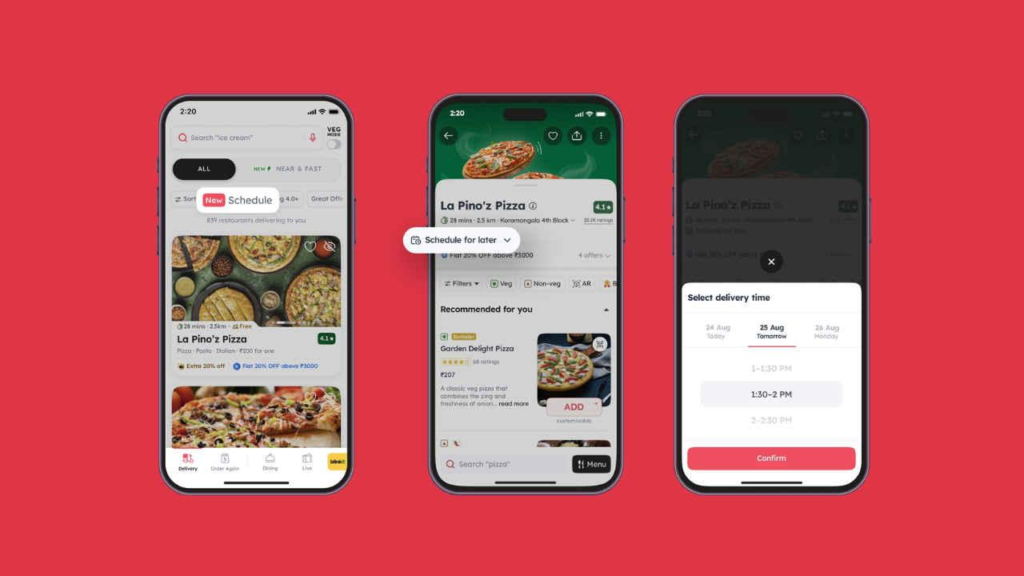
A customer browses restaurants, selects food items, and places an order through the app.
Step 2: Restaurant Accepts the Order
The restaurant receives the request and prepares the food.
Step 3: Delivery Partner is Assigned
Zomato’s algorithm identifies the nearest available delivery partner.
Step 4: Food Delivery
The delivery partner picks up the order and delivers it to the customer.
Step 5: Revenue Distribution
The order value is distributed among:
- Restaurant
- Delivery partner
- Zomato
This process occurs thousands of times every minute across the platform.
Revenue Streams
1. Restaurant Commissions
The largest source of revenue comes from commissions charged to restaurant partners.
For every order processed through the platform, Zomato earns a percentage of the order value.
Example
| Order Value | ₹500 |
| Restaurant Share | ₹400 |
| Zomato Commission | ₹100 |
As order volume increases, commission revenue grows proportionally.
2. Delivery Charges
Customers often pay delivery fees based on:
- Distance
- Peak demand
- Weather conditions
- Service levels
These fees help offset logistics expenses while contributing to revenue growth.
3. Advertising and Promotions
Restaurants compete for customer visibility.
To improve exposure, they pay for:
- Sponsored placements
- Featured listings
- Search promotions
- Brand advertisements
Advertising revenue is particularly attractive because it generates high margins while utilizing existing platform traffic.
4. Membership Programs
Subscription services offer users benefits such as:
- Free deliveries
- Exclusive discounts
- Dining rewards
- Priority customer support
Recurring subscription revenue helps improve customer retention and loyalty
5. Hyperpure: The B2B Growth Engine
Hyperpure supplies restaurants with:
- Fresh produce
- Dairy products
- Meat and seafood
- Packaging materials
- Kitchen essentials
This business vertical helps restaurants streamline procurement while generating additional revenue for Zomato.
Hyperpure also strengthens restaurant relationships by making the company an essential operational partner rather than simply a delivery platform.
Value Proposition
For Customers
Convenience
Food can be ordered anytime and delivered to the doorstep.
Variety
Users gain access to thousands of restaurants and cuisines.
Transparency
Reviews, ratings, menus, and real-time tracking improve trust.
Personalization
AI-driven recommendations improve the customer experience.
For Restaurants
Increased Sales
Restaurants gain access to a large customer base.
Digital Presence
Even small businesses can compete online.
Marketing Opportunities
Promotional tools improve customer acquisition.
Data Insights
Restaurants receive analytics regarding customer behavior and order trends.
For Delivery Partners
Benefits include:
- Flexible work schedules
- Incentive-based earnings
- Access to a large order network
- Technology-enabled route optimization
Competitive Advantages
Strong Network Effects
Zomato benefits from a powerful marketplace effect.
More customers attract more restaurants.
More restaurants attract more customers.
This creates a self-reinforcing cycle that strengthens the platform over time.
Technology and Data
Millions of transactions generate valuable insights.
The company uses data to:
- Predict demand
- Personalize recommendations
- Optimize delivery routes
- Improve operational efficiency
Data-driven decision-making creates a significant competitive advantage.
Brand Recognition
Zomato has become one of India’s most recognized consumer technology brands.
Strong brand awareness helps:
- Reduce customer acquisition costs
- Increase trust
- Attract restaurant partners
- Improve customer retention
Challenges
Despite its success, Zomato faces several challenges.
High Logistics Costs
Food delivery requires significant spending on rider incentives and operational support.
Intense Competition
The food-tech market remains highly competitive, requiring continuous innovation and investment.
Restaurant Relations
Balancing commission rates and restaurant profitability remains a delicate challenge.
Profitability Pressure
The company must continuously optimize costs while maintaining service quality.
SWOT Analysis
| Strengths | Weaknesses |
| Strong brand | High operating costs |
| Large customer base | Thin margins |
| Advanced technology | Delivery dependence |
| Multiple revenue streams | Competitive market |
| Opportunities | Threats |
| Hyperpure expansion | Aggressive competitors |
| Quick commerce growth | Regulatory changes |
| AI-driven services | Rising labor costs |
| Tier-2 and Tier-3 cities | Economic slowdowns |
Key Lessons from Zomato’s Journey
- Solve a simple problem first – restaurant discovery.
- Build strong network effects between users and restaurants.
- Leverage technology and data to improve efficiency.
- Diversify revenue streams beyond the core business.
- Continuously evolve based on changing customer behavior.
Conclusion
Zomato’s journey from a restaurant discovery website to a comprehensive food-tech ecosystem demonstrates the power of platform-based business models. By connecting customers, restaurants, delivery partners, and suppliers, the company has created a scalable ecosystem that generates value for multiple stakeholders.
Its diversified revenue streams—including restaurant commissions, delivery charges, advertising, subscriptions, and Hyperpure—provide resilience and growth opportunities. Combined with strong network effects, advanced technology, and brand recognition, these factors have helped Zomato become one of India’s most successful digital businesses.
Today, Zomato is not merely a food delivery company; it is a technology-driven marketplace that continues to reshape how India discovers, orders, and experiences food.