
Introduction
When Ritesh Agarwal started exploring budget accommodation in India, he noticed a problem that millions of travellers already knew well.
Affordable hotels were available—but consistency was not.
A guest could book a room expecting a clean, comfortable stay and arrive to find something completely different. Hotel owners, meanwhile, often struggled with low occupancy, limited visibility, and the challenge of competing in an increasingly digital market.
This gap created an opportunity.
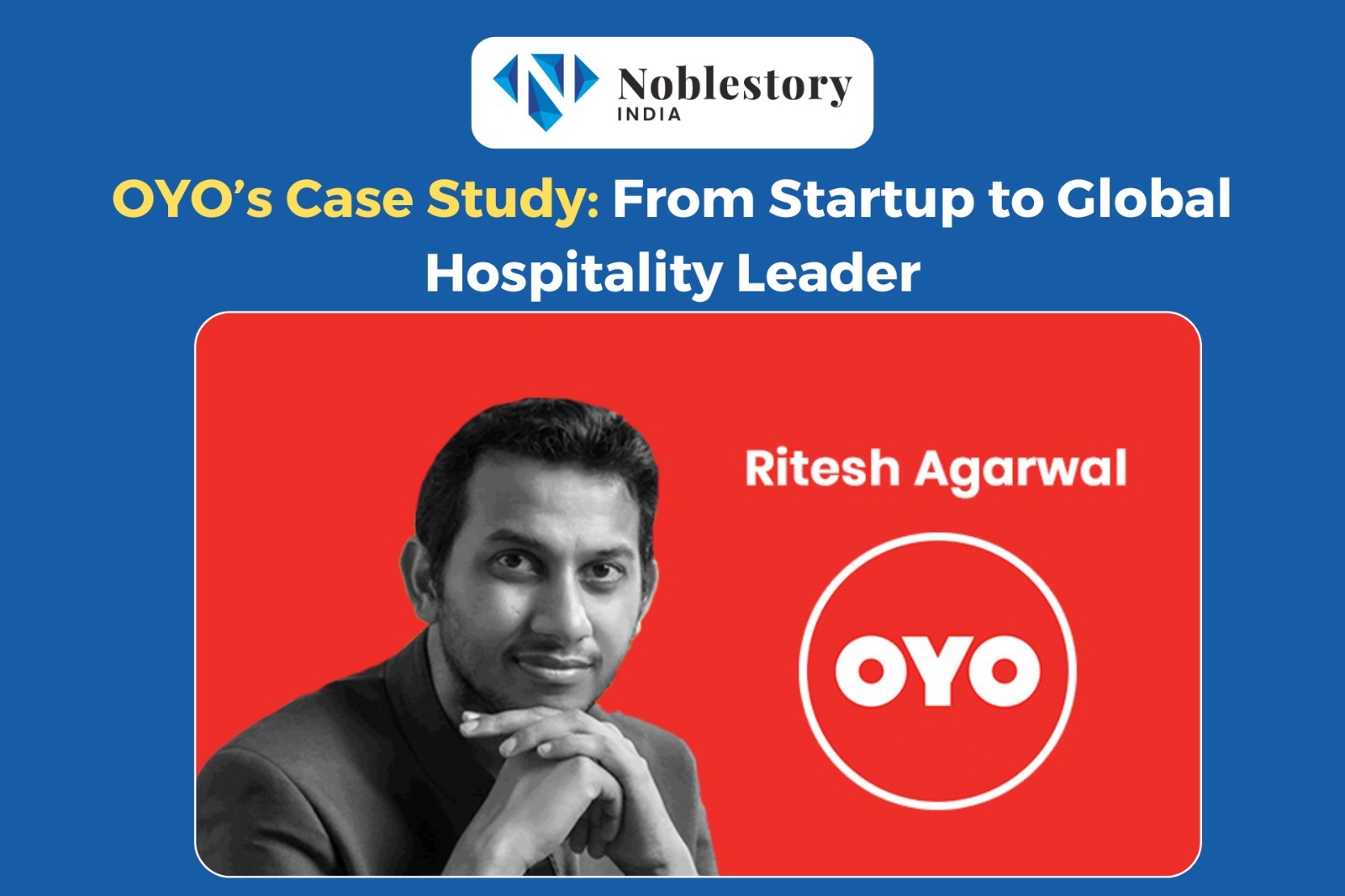
In 2013, Ritesh Agarwal launched OYO, initially known as Oravel Stays, with a simple idea: bring standardization, technology, and branding to India’s fragmented budget hotel industry.
What started with a single property in Gurugram eventually grew into a global hospitality technology and hotel network. OYO’s journey became one of the most closely watched startup stories in India—full of rapid growth, international expansion, business-model changes, challenges, and strategic transformation.
The Problem OYO Identified
Before OYO, the budget hotel market was highly fragmented.
Large hotel chains offered standardized experiences, but they were often expensive. At the other end of the market, thousands of independent hotels offered affordable rooms but lacked consistent branding, technology, marketing, and service standards.
This created a clear gap in the market:
Travellers wanted affordable accommodation with predictable quality.
Hotel owners wanted:
- More bookings
- Better occupancy rates
- Digital visibility
- Professional branding
- Technology to manage operations
- Access to a wider customer base
OYO attempted to connect these two needs.
Instead of building hotels from the ground up, the company partnered with existing properties and brought them into a branded ecosystem.
This was the foundation of OYO’s early business model.

From One Hotel to a Scalable Business
OYO’s first property opened in Gurugram in 2013. The company focused on transforming existing budget hotels into standardized, branded accommodations.
The early strategy involved improving key aspects of the guest experience, including:
- Room quality
- Cleanliness
- Basic amenities
- Branding
- Pricing
- Customer experience
The company then used technology and online distribution to make these rooms easier for customers to discover and book.
This approach gave OYO an important advantage.
It did not need to spend the same amount of capital required to build and own thousands of hotels. Instead, it could work with existing properties and create a scalable network.
That asset-light approach became a significant part of OYO’s growth story.
The Power of Standardization
One of OYO’s most important innovations was not simply putting hotels online.
It was creating a recognizable brand promise.
For customers, the OYO brand attempted to communicate a certain level of consistency. The idea was simple: when customers booked an OYO-branded property, they could expect a more predictable experience than they might receive from an unknown independent hotel.
For hotel owners, the OYO brand provided:
- Customer acquisition
- Marketing support
- Technology tools
- Pricing insights
- Brand visibility
- Operational support
This created a two-sided business model.
Customers received convenience and visibility.
Hotel partners received demand and technology.
The more properties OYO added, the more valuable its platform could become. The more customers used the platform, the more attractive it became to additional hotel partners.
Technology Became a Core Growth Engine
OYO’s growth was not driven only by hotel partnerships.
Technology played a major role in how the company managed its expanding network.
The company used technology to support areas such as:
Online Booking
Customers could search and book rooms through OYO’s digital platforms.
Dynamic Pricing
Pricing could be adjusted according to demand, seasonality, local events, and market conditions.
Property Management
Technology helped partners manage availability, bookings, and operations.
Data-Driven Decision-Making
Customer and booking data could help identify demand patterns and improve pricing and inventory decisions.
Digital Onboarding
OYO also introduced technology platforms designed to make it easier for hotel partners to join and manage their relationship with the company.
The result was a business that operated at the intersection of hospitality, technology, data, and digital distribution.
A Major Business Model Evolution
OYO’s business model did not remain unchanged.
The company initially operated with an aggregation-style approach, bringing independent hotels onto its platform. Over time, it shifted more heavily toward franchise, management, and operating models.
This change was important.
The aggregation model offered rapid expansion, but maintaining consistent service across a large number of loosely connected properties could be challenging.
A more structured franchise and management approach offered greater control over:
- Brand standards
- Operations
- Customer experience
- Service quality
- Property performance
The shift demonstrated an important lesson about scaling a startup:
The business model that helps a company grow quickly may not always be the model that helps it grow sustainably.
OYO’s evolution was an attempt to find a better balance between expansion, control, cost, and quality.
Rapid Expansion Across India
After establishing its model in India, OYO expanded aggressively.
The company grew from a small number of properties to a large network across cities and towns. According to OYO’s own company history, the business reached 100 cities and more than 10,000 rooms by 2015. It also launched its mobile application and later expanded internationally.
This expansion was supported by several factors:
1. A Large Market Opportunity
India had a massive demand for affordable accommodation.
2. A Fragmented Hotel Industry
Thousands of independent properties created a large potential partner network.
3. Smartphone and Internet Growth
More customers were becoming comfortable with online hotel booking.
4. Strong Investor Interest
Significant investment allowed OYO to invest heavily in technology, marketing, hiring, and international expansion.
5. A Scalable Model
The company could expand by adding and transforming existing properties instead of constructing every hotel itself.
International Expansion
OYO’s ambition was never limited to the Indian market.
The company expanded into markets including Malaysia, the United Kingdom, China, Indonesia, and other international locations. Its own company timeline records Malaysia as its first international market in 2016, followed by expansion beyond Asia and into other markets.
The international strategy was based on a familiar idea:
The problem of fragmented, independent accommodation businesses exists in many countries.
However, global expansion also introduced new challenges.
Every market had different:
- Customer expectations
- Regulations
- Hospitality standards
- Competitive environments
- Property-owner relationships
- Cultural preferences
This meant OYO had to balance a global brand with local market realities.
Building a Portfolio of Hospitality Brands
OYO also expanded beyond a single budget-hotel identity.
The company introduced different formats and brands to serve different customer segments. One example was OYO Townhouse, designed for the mid-market segment.
This reflected an important strategic shift.
Instead of serving only budget travellers, OYO began exploring multiple segments of the hospitality market.
The larger opportunity was no longer simply:
“How do we help people book an affordable room?”
It became:
“How can we build a broader hospitality ecosystem?”
This included hotels, homes, living spaces, and technology services for hospitality businesses.
The Role of the Asset-Light Model
One of OYO’s most important strategic decisions was its asset-light approach.
Traditional hotel companies often invest heavily in:
- Land
- Construction
- Buildings
- Property maintenance
- Long-term physical assets
OYO’s model focused more on working with existing properties.
This created several potential advantages:
Faster Expansion
The company could enter new locations without building hotels from scratch.
Lower Capital Requirements
It could use existing infrastructure rather than owning every property.
Network Growth
More properties could be added through partnerships and franchise arrangements.
Technology Leverage
The company could create digital systems that served a growing network of properties.
The asset-light model was one of the key reasons OYO could pursue rapid expansion. However, it also created a major challenge: maintaining consistent quality across a large and diverse partner network.
That challenge became increasingly important as the company scaled.
The Challenges Behind Rapid Growth
OYO’s growth story was not without difficulties.
Rapid expansion can create pressure in several areas:
- Maintaining consistent service quality
- Managing relationships with property owners
- Controlling operating costs
- Balancing growth with profitability
- Adapting the business model
- Managing international operations
The company’s aggressive expansion also raised questions about whether rapid scale could be matched by sustainable operations.
This is one of the most important lessons from the OYO case study:
Growth is not the same as sustainable success.
A startup can grow rapidly in terms of customers, properties, revenue, and geographical presence. But long-term success requires a stronger foundation that includes healthy unit economics, operational discipline, customer trust, and a sustainable business model.
The Impact of the COVID-19 Pandemic
The hospitality industry was among the sectors most severely affected by the COVID-19 pandemic.
Travel restrictions and reduced travel demand created enormous pressure on hotels and hospitality businesses worldwide.
For a company operating across a large network of properties, the disruption created challenges across:
- Hotel occupancy
- Revenue
- Partner relationships
- Operations
- International markets
The pandemic highlighted a fundamental weakness in the hospitality industry:
When people stop travelling, hotel businesses immediately feel the impact.
For OYO, the crisis created an opportunity to reassess its growth strategy and focus more heavily on operational efficiency and profitability.
The company’s journey increasingly shifted from a focus on expansion at any cost toward a greater emphasis on sustainable growth.
From Growth at Any Cost to Sustainable Growth
The early startup phase often rewards speed.
Startups are encouraged to:
- Acquire customers
- Enter new markets
- Expand quickly
- Raise capital
- Build market share
But as a company becomes larger, the priorities change.
The focus shifts toward:
- Profitability
- Cash flow
- Operational efficiency
- Customer retention
- Stronger business fundamentals
OYO’s later journey reflects this transition.
The company began focusing more on strengthening its core business, improving financial performance, and creating a more sustainable operating model.
Recent financial reporting has highlighted stronger profitability and revenue growth, although the company’s longer-term path continues to involve strategic and capital-market challenges.
What Made OYO Successful?
Several factors contributed to OYO’s rise.
1. It Identified a Real Market Gap
OYO did not create the need for affordable accommodation.
It recognized an existing problem and attempted to solve it at scale.
2. It Built a Strong Brand
In a fragmented market, branding created recognition.
A customer was more likely to trust a recognizable name than an unknown hotel property.
3. It Used Technology to Scale
Technology helped OYO manage bookings, pricing, distribution, and partner operations.
4. It Chose an Asset-Light Approach
Working with existing properties allowed faster expansion than building hotels from scratch.
5. It Continued to Adapt
The company changed its business model, entered new markets, introduced new brands, and adjusted its strategy over time.
6. It Focused on Both Sides of the Market
OYO had to serve two important groups:
Travellers looking for accommodation.
Hotel owners looking for business and technology support.
The ability to create value for both sides was central to its platform strategy.
Key Lessons from OYO’s Business Journey
Lesson 1: Solve a Real Problem
The strongest startups often begin by identifying a problem that people already experience.
OYO recognized the gap between affordable prices and reliable quality.
Lesson 2: Standardization Can Create Brand Value
In a fragmented industry, consistency can become a competitive advantage.
Lesson 3: Technology Is More Powerful When It Solves Operational Problems
Technology was not just used to create a booking app.
It became part of pricing, distribution, partner management, and operations.
Lesson 4: Scaling Requires Constant Adaptation
The model that works for a startup with 10 properties may not work for a company with thousands of properties across multiple countries.
Lesson 5: Rapid Growth Must Eventually Become Sustainable Growth
Expansion can attract attention.
But profitability, efficiency, and customer trust determine long-term survival.

Conclusion
OYO’s journey from a single budget hotel in Gurugram to a global hospitality brand is a powerful example of how technology can transform a traditional industry.
The company identified a fragmented market, created a recognizable brand, used technology to improve distribution and operations, and adopted an asset-light model that allowed rapid expansion.
But the most valuable part of OYO’s story is not simply its growth.
It is the transformation that followed.
The company’s journey demonstrates that building a global business requires more than finding a market opportunity. It requires the ability to adapt the business model, respond to challenges, improve operational discipline, and move from rapid expansion toward sustainable growth.